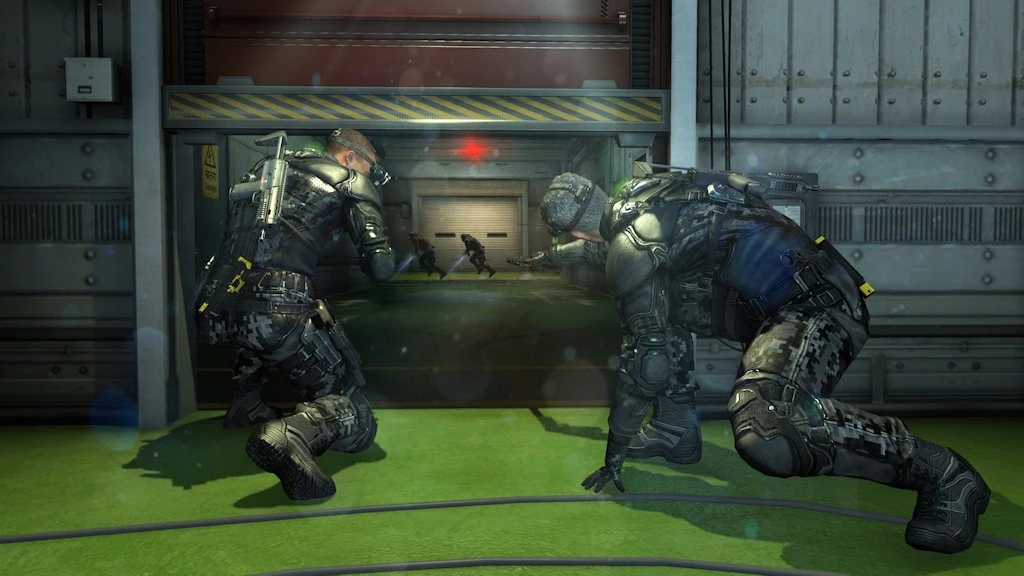

Fourth Echelon commander Sam Fisher moves in with Fourth Echelon operator Isaac Briggs during a Co-op mission.
Cooperative or co-op is a two-player multiplayer game mode featured in Splinter Cell: Chaos Theory, Splinter Cell: Double Agent (Version 2), Splinter Cell: Conviction and Splinter Cell: Blacklist. It allows two players to play together through a separate campaign compared to the campaign campaign, or non-campaign modes in certain maps. Typically, the two campaigns will relate to each other in story; how much they relate depends on the game.
Overview
In Splinter Cell: Chaos Theory and Splinter Cell: Double Agent (Version 2), two players play as Third Echelon Splinter Cell agents Agent One and Agent Two, respectively. While the stories relate to the single player mode, the missions are structured differently and have different objectives for both players to complete. In Splinter Cell: Conviction, two players take control of two different characters: Third Echelon Splinter Cell agent Archer and VORON operative Kestrel as they work together in a joint operation to secure four Russian EMP warheads. In Splinter Cell: Blacklist, both players take control of Fourth Echelon commander Sam Fisher and Fourth Echelon operative Isaac Briggs as they work together in various 4E missions. Both players can participate in Briggs' story-based 4E missions, or work together in other missions that are not particularly story-based.
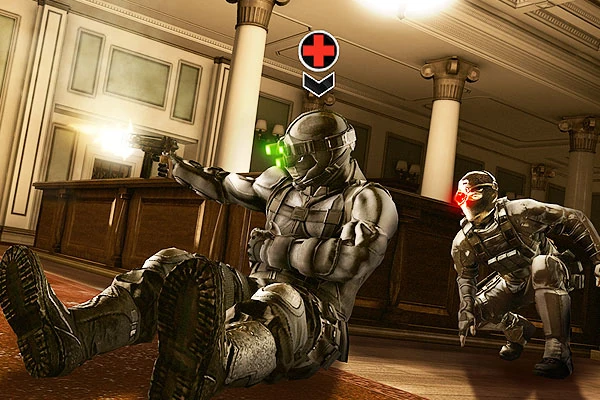

Archer, who is injured, is about to be revived by Kestrel.
Throughout the Splinter Cell series, the cooperative modes are different but remain with similar features. Cooperative levels are typically linear and task the players to work together to get through missions, often requiring actions that can only be completed by two people. In Splinter Cell: Chaos Theory and Splinter Cell: Double Agent (Version 2), dual actions enable players to do a variety of moves such as boosting or launching the other player across a large gap.
In Splinter Cell: Conviction, co-op returned offering more than a campaign, players can play all different modes on a variety of maps. There are also customization options and modifiers that the player can enable or disable. In Splinter Cell: Blacklist, the options and features are similar to Conviction, and additional segments had been added such as providing air support via a predator drone to protect the other player.
Similar cooperative gameplay features exist in multiple Splinter Cell titles, such as the possibility for one player to become injured (caused by losing all of their health points). Once one player becomes injured, they must wait where they are until the other player revives them. In Conviction and Blacklist, the ability to sit up and shoot at enemies with a sidearm was featured. Another feature introduced in Conviction is the ability for both players to use a Dual Execute feature to dispose of their enemies; this feature made its return in Blacklist.
Trivia
- Co-op was not actually introduced until Splinter Cell: Chaos Theory, the third Splinter Cell title. In the first Splinter Cell, only a single player mode was present whereas in the second Splinter Cell game, Pandora Tomorrow, included a multiplayer-based mode, Spies vs Mercs.
- It is not known what happened to the first co-op characters, Agent One and Agent Two, in the Splinter Cell universe. In Splinter Cell: Conviction, Archer's fate is shown and what actually happened to Kestrel is revealed in Splinter Cell: Blacklist.
- Co-op (as well as multiplayer, Spies vs Mercs) was not included in the 2011 HD release of Tom Clancy's Splinter Cell Classic Trilogy HD, which included the first three Splinter Cell titles in High-Definition.
- At the end of the co-op campaign in Splinter Cell: Conviction, Archer and Kestrel are forced to fight each other in the holds of the cargo plane where they were transporting the EMP warheads (the final mission). This bears a resemblance to the 1987 beat 'em up video game Double Dragon where the two protagonists, despite working together through the game, had to fight each other in the end.
- Cooperative campaigns/modes have been present in the series since Splinter Cell: Chaos Theory, with Splinter Cell: Double Agent (Version 1) being the only main Splinter Cell title to not include it.
- Splinter Cell: Double Agent (Version 1) did include challenges that could be completed with a partner via system link or online (Xbox Live or PlayStation Network).